-





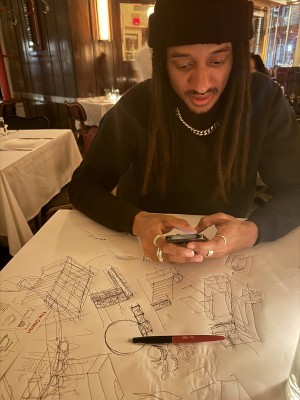




In design, and in the world, our trajectory is invariably pointing us toward speed. Make, do, more, faster, now. An obvious implication of our global capital economy and we are well on our way in this race. Is it naive to stop running when everyone else is picking up pace? Is there still a way to contribute by turning around?
These questions have been stimulated by the contrast between my chosen adult life in NYC and the state in which I was raised: Alaska. Despite all of its iconic institutions, establishments, people, and qualities, New York City, in many ways, can in fact limit perspective based on its uniquely heightened social and cultural experiences. The silence of the woods in a remote landscape force a different kind of reflection, one that highlights the importance of contrast as a means to perspective.
But no matter where you find yourself in the world, the omnipresent backdrop of our technologically-driven era relentlessly accelerates the gospel of convenience, promising to “save you more time” or “make you more money”—meanwhile most people find what to actually do with it, an irrelevant question.
In response to these observations, my partner and I have begun to step outside of the speed of the city to intentionally embrace inconvenience as an exercise for our human capability and wellbeing; a choice to reconnect with the fundamentals of effort which have historically been connected to the source of life.
We have co-founded SOON Foundation for the Arts a 501(c)(3) non-profit dedicated to building physical infrastructure for global cultural exchange between Alaska and the rest of the world through contemporary art. We work diligently, but with no rush. We can not tell you how far away is “soon”, but it will be. -






I started filming the packaging system I spent three years designing in and for Target. As a designer, our work is primarily distributed in the digital realm. Primarily for other designers or in hopes of new clients. Logically, we have been trained to curate, polish, and showcase the results of our work in its best light, or its “better than it actually is” light. Definitely never its worst.
But what if the success of our work actually had very little to do with the way it looked on screen? Or even the way it looked at all?
Take for example: Up&Up. Yes, repositioning a white-label-brand to appear more “poppy” and “modern” has a subconscious impact on shoppers, but ultimately, the rebrand can only be as successful as the company itself. No matter how beautiful or easy to navigate the packaging is, the questions that matter are: How many people walk through the Target doors? Or how many clicks can they get on Google's sponsored results? How much data do they own? Packaging won’t solve the existential questions of our time like: Why go to the store when I can have it delivered? Why buy from Target.com when Amazon has everything?
Here enlies a CEO’s paradox: paper towels will sell as long as stores stay open, and stores will stay open as long as paper towels sell. So: does a facelift for a $3-billion white-label-brand matter? Well, yes. But design is only a single lever within a complex ecosystem of cultural and company barriers to overcome. This seems to be the calling for designer to become marketer (or entrepreneur), rather than the other way around.
Modernization of a well designed 200+ product system is now simply table stakes for a retailer. Rather than celebrate or self-aggrandize the role of design in it, I’d rather reflect on the invisibility that surrounds the work once it’s actually in the world: the human psychology and cultural evolution that dictates interaction with these artifacts.
In this way, reality, in its unpolished form, can tell us more about culture, about today, or about tomorrow than conjured “impact” statistics on a case study website. Perhaps reading between these lines, seeking a true understanding of nature of reality, is actually the “best design”. -
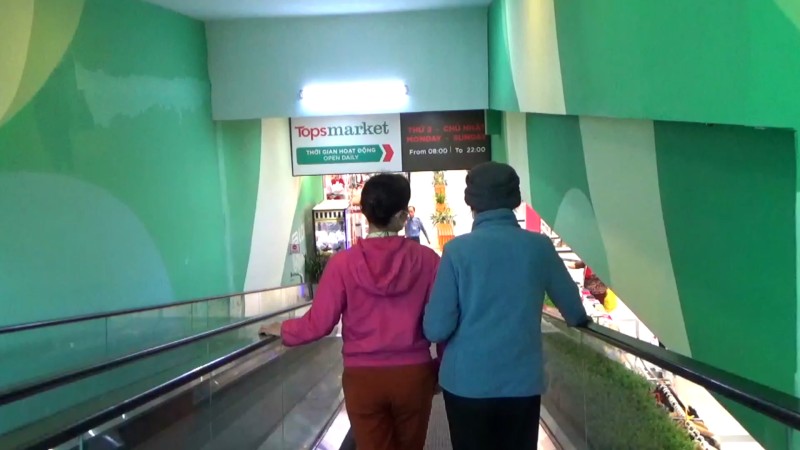

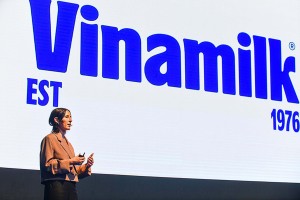
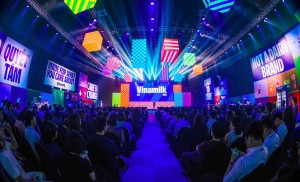
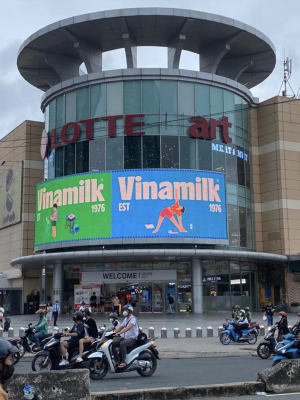

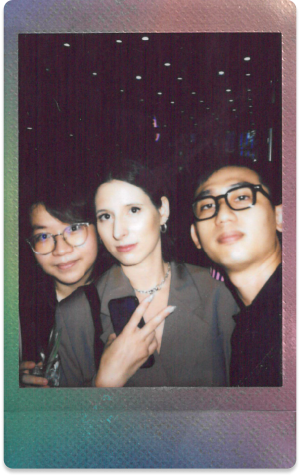
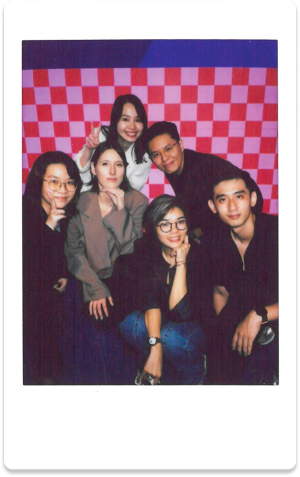
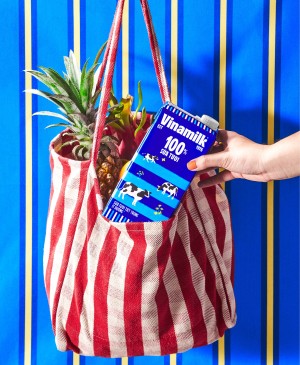
Working in another country had never crossed my mind until I got an email from Duy Dao asking if I would like to come to Vietnam. After spending my career leading work on large scale brand and packaging projects in the States, he invited me to collaborate with his studio on a beloved Vietnamese national brand.
What I found when I arrived, was a company established with the purpose of caring for the country and a genuine culture of generosity. A spirit I had never seen embodied at a corporate level in America. After the brave and well crafted rebrand launch by Studio Duy, I stayed on in a support capacity to transition the brand system and ethos to the internal design team.
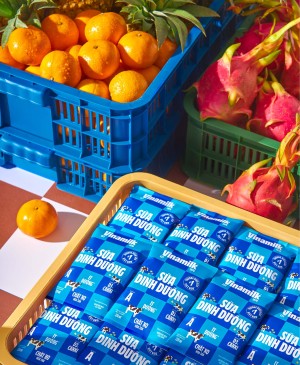
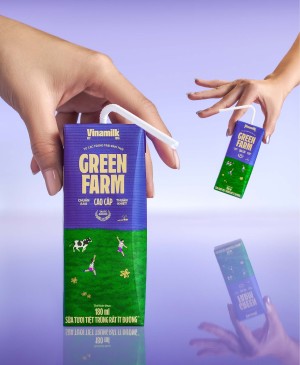
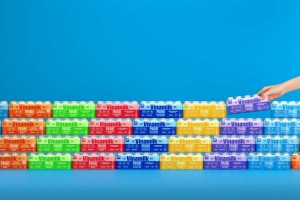
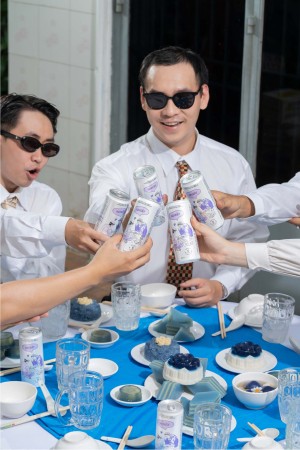
This film documents some snapshots of the work we did together during that period, including new packaging for dozens of products and new brands. Getting stronger every day.
In this emerging global economy, and increasingly global society, this project serves as a leading example of the future of global collaboration. One in which a deep, local understanding of a culture and brand can be thoughtfully translated to incorporate international experience. One in which knowledge can be shared rather than outsourced.
With its new strong design foundation and sustained, long-term partnership, Vinamilk has effectively nurtured an emerging, elite internal design team who injects their own youthful spirit into the brand, reflecting the next era of the country’s ambition. -



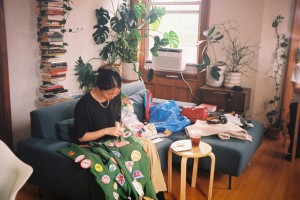




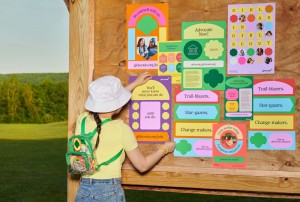
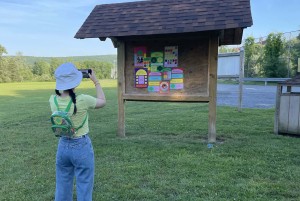
Is ambition a good thing? According to Pew Research, we tend to see it as a positive trait in men—and a negative one in women—but what if we looked beyond gender? Simply at the assumption of ambition as inherently positive?
In 2018, I read a tweet characterizing designers at my current company as having “hollow ambition”, it gutted me at the time, as a self-identifying “ambitious” designer, working my way towards a leadership role.
By the time I was asked to lead the rebrand of Girl Scouts of the USA, I seamlessly stepped into the Creative Director role—fostering a close-knit team, guiding work, and navigating relationships with clients and stakeholders. All of the creative work was rooted in the central theme of “championing of female ambition", something that still resonated deeply with my younger self: an aspiring designer from Alaska trying to carve out my own path in the New York art & design scene.
But after stepping out of the hierarchical structure of an agency, I’ve come to see ambition as a more nuanced value: a means whose end must be defined. Do our achievements come at the expense of others? Do our efforts advance the right agendas? If we leave our ambition on autopilot, will it turn into discontent and chronic striving? What is ambition without a goal? Is that goal a worthy one?
When our culture’s ethos is built on “Fake it till you make it.” and “Work smart, not hard.” is ambition the right value to advance? Where do complacency and contentment meet? Where does high level mediocrity meet low level excellence? According to who?
























×
×
![]()
![Large Image]()
![]()